Say After Me — Facts for Reviewers
A neutral, quotable reference for reviewers and listicle authors. Everything below is factual — please quote freely. We have not fabricated ratings or awards, so please don’t cite any.
What It Is (in one sentence)
Say After Me is an iOS affirmation app that makes you speak each affirmation out loud and is the only affirmation app that scores how convincingly you say it — a 0–10 conviction score across volume, pace, and hesitation — using AI voice guidance, on-device speech recognition, adaptive coaching, and progressive difficulty.
The Differentiator: Conviction Scoring
If you cover one thing, cover this. Say After Me is the only affirmation app that measures the quality of your spoken delivery. Every affirmation you say aloud gets a 0–10 conviction score.
How It Works
Model
A natural AI voice speaks the affirmation, modeling confident delivery.
Speak
The user says the affirmation aloud; on-device speech recognition verifies they said it.
Score
Conviction scoring rates the delivery 0–10 (volume, pace, hesitation), tracked over time.
Progress
Adaptive coaching and progressive difficulty advance the user as their scores rise.
Key Facts
App name
Say After Me: Affirmations
Category
Affirmation app / self-improvement
Platform
iPhone and iPad, iOS 17 or later
Developer
Igwe Studios (founder: Chisom Igwe)
Price to download
Free
Free tier
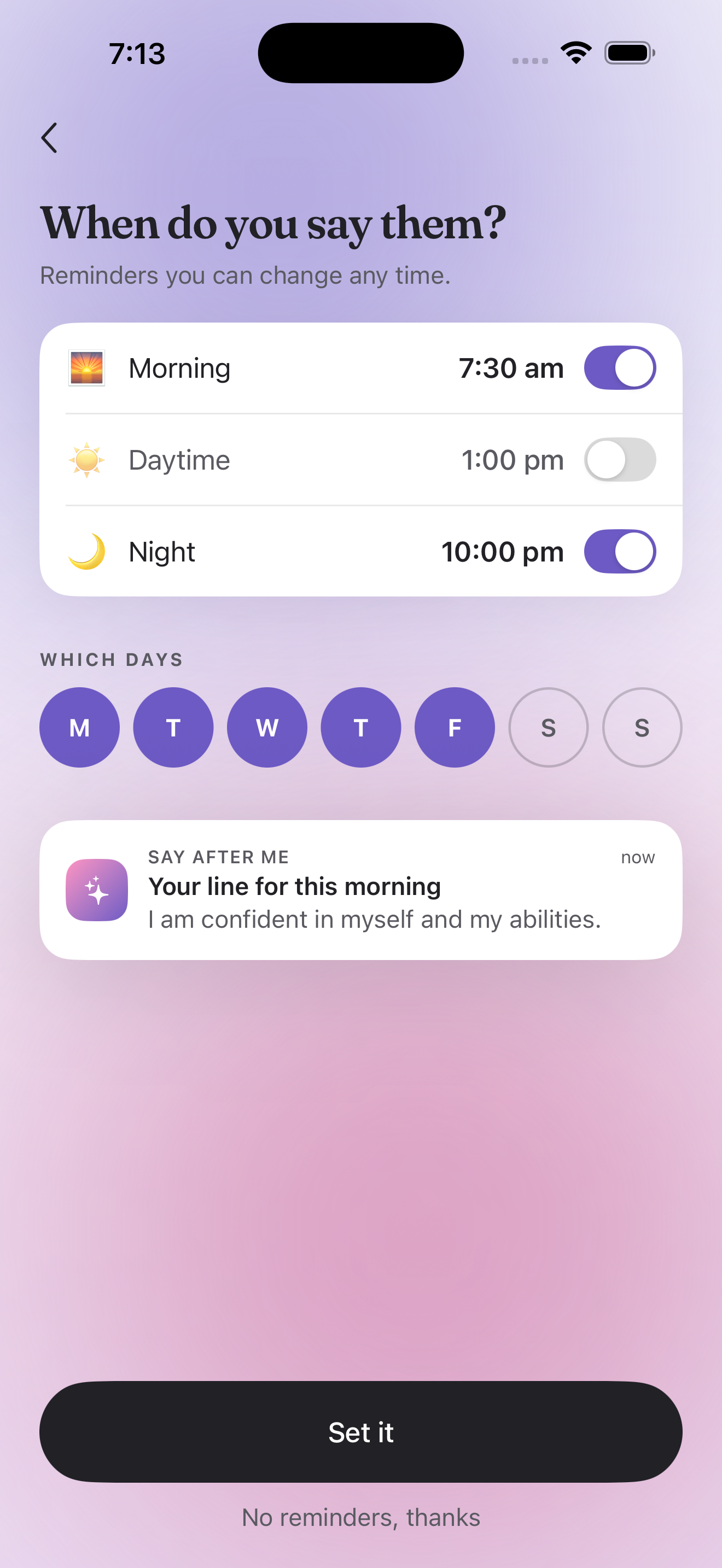
All 8 core categories (32 affirmations), full progressive difficulty ladder, speech recognition, conviction scoring, streaks, home-screen widget, daily reminders, up to 5 custom affirmations, AI voice guidance
Premium pricing
$1.99/week, $4.99/month, or $29.99/year
Core technology
OpenAI voice synthesis (6 voices) + Apple on-device Speech framework for recognition
Privacy
Speech recognition processed on-device; voice audio not sent to any server
Ratings
No public rating yet (new listing) — please do not cite a star rating
The Science (safe to cite)
The Production Effect
In University of Waterloo research on the production effect, people correctly recognized 77% of words they had spoken aloud versus 66% of words they read silently. Say After Me is built on this principle — every session requires speaking aloud.
Self-Affirmation Theory
Self-affirmation theory, developed by psychologist Claude Steele in 1988, is supported by decades of peer-reviewed research, including neuroimaging showing self-affirmation activates the brain’s reward centers.
Progressive Difficulty & the Backfire Effect
Research shows grand affirmations people don’t believe can backfire for those with low self-esteem. Say After Me’s progressive ladder starts with believable statements and advances only as conviction scores improve.
Screenshots
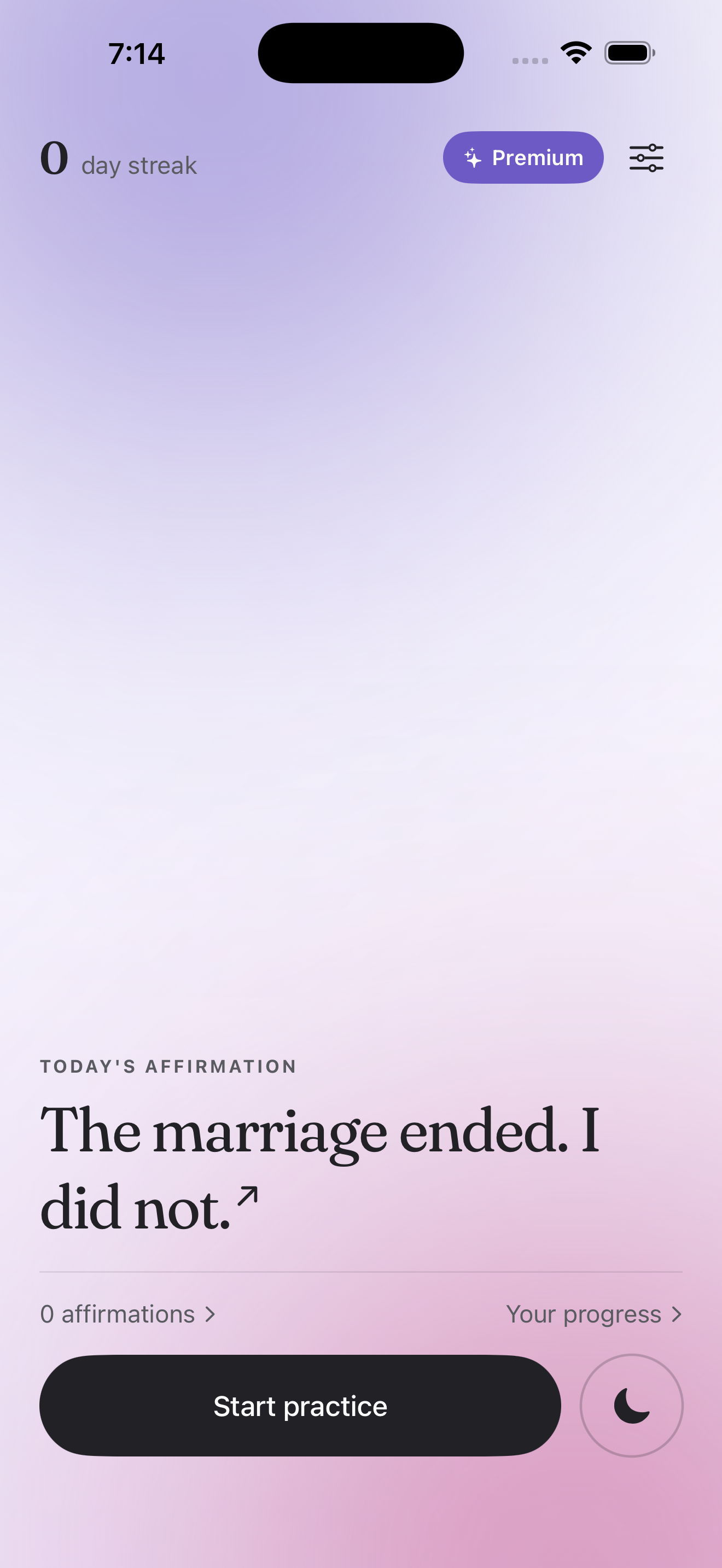
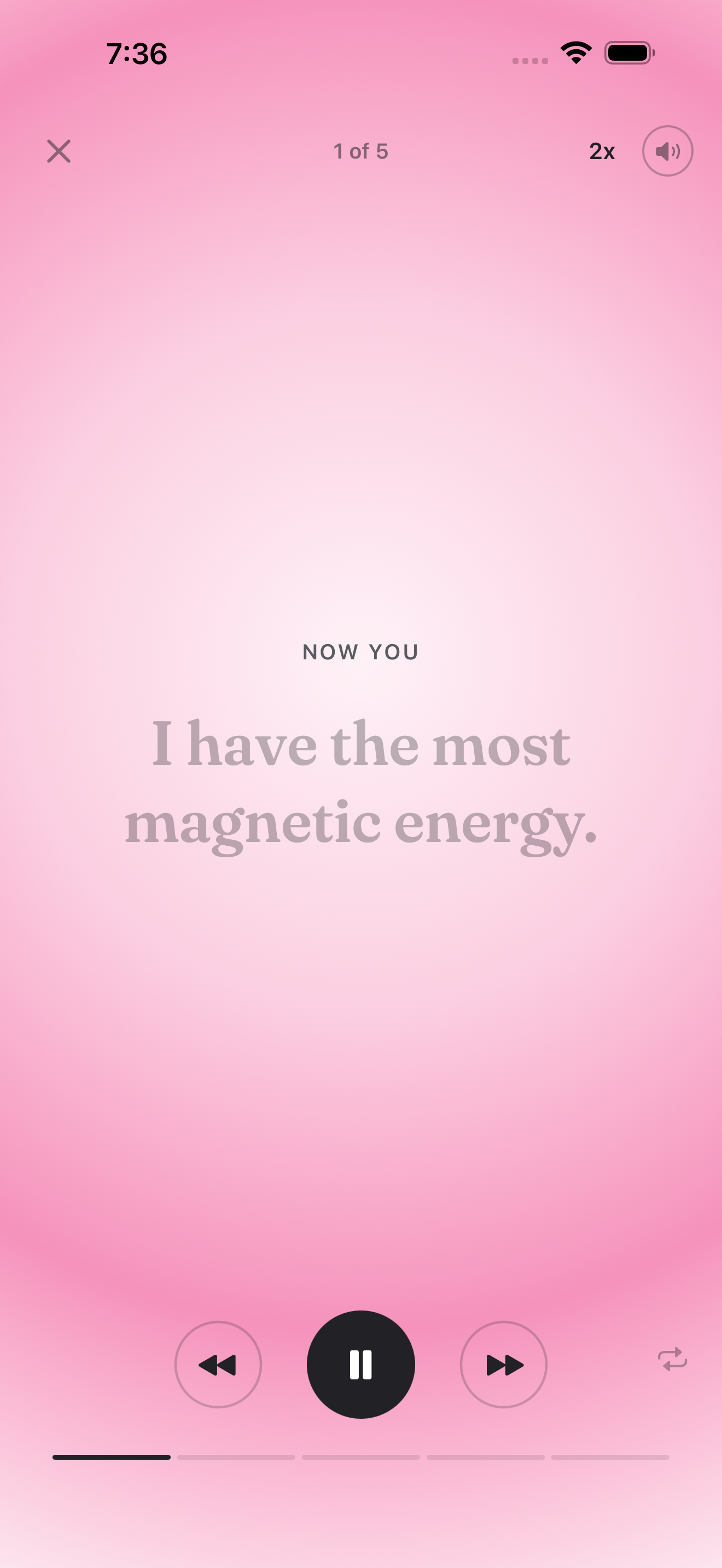
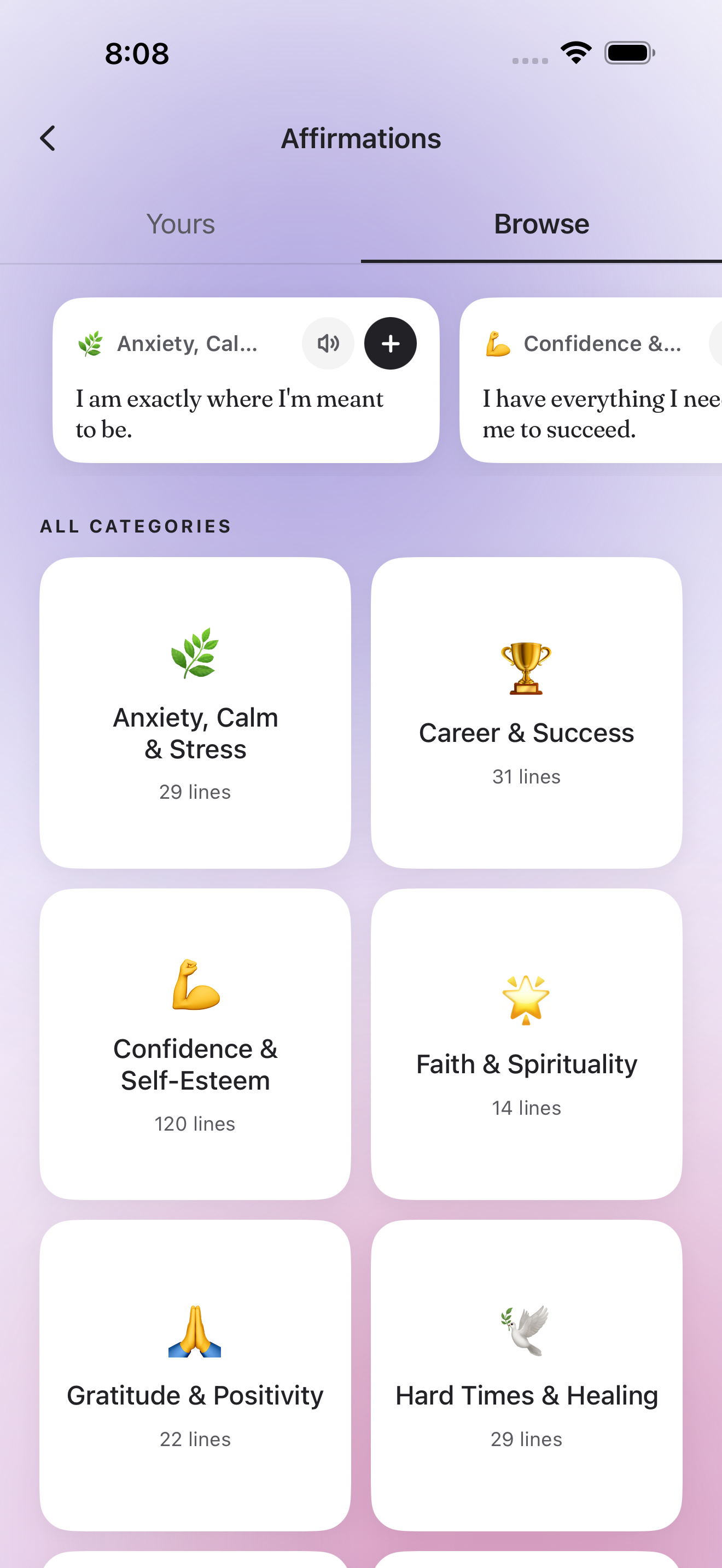
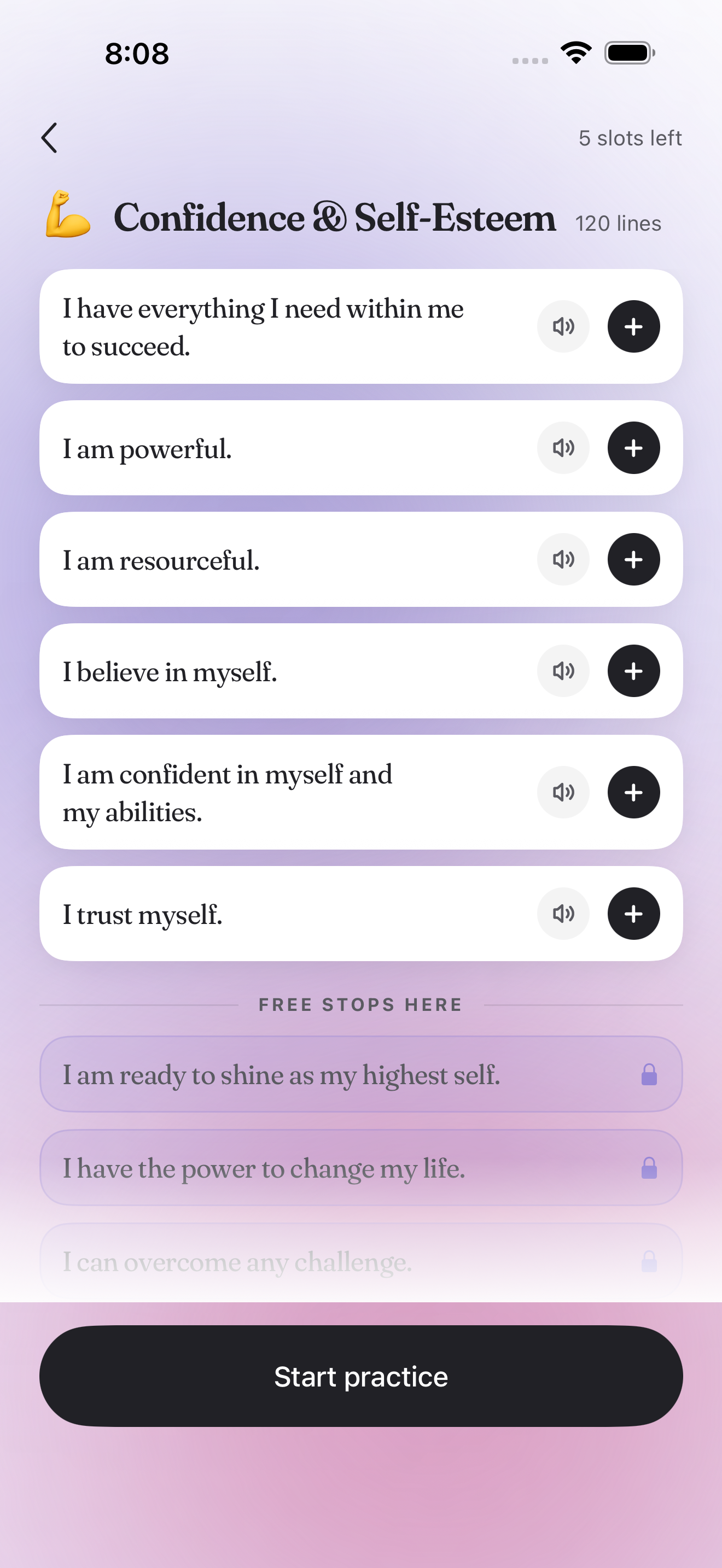
Free to use in coverage of Say After Me. High-resolution PNGs.
“Say After Me is the only affirmation app that scores how convincingly you say each affirmation — turning a passive ritual into measurable, active practice.”
Suggested pull-quote — free to use or adapt.
Developer
Say After Me is developed by Igwe Studios, founded by Chisom Igwe. For press inquiries, interviews, or additional assets, contact [email protected].
See It For Yourself
The best way to review Say After Me is to speak an affirmation and watch it score you. The core speak-verify-score loop is free.